
A bracelet worn daily endures dozens of micro-aggressions per hour: rubbing against a keyboard, contact with tap water, exposure to sweat. The choice between a thin metal bracelet and a colored cord relies less on aesthetic preference than on the compatibility between the material, the closure method, and the actual constraints of a moving wrist.
Material Durability for Daily Wear: Cord, Thin Chain, and Steel
The first criterion to decide on is the durability of the material against mechanical and chemical wear. A cord made of waxed cotton or nylon withstands light shocks well but absorbs moisture. After a few weeks of continuous wear, an untreated cord may discolor or fray at the points of friction.
A thin gold-plated chain, on the other hand, retains its shine longer, but the plating eventually wears off at the most stressed links. To choose between a cord bracelet or a thin chain, the question to ask is straightforward: will the bracelet be removed every evening or worn continuously, including in the shower?
Stainless steel stands out as the most suitable material for permanent wear. Resistant to water, sweat, and superficial scratches, it does not oxidize. Several brands have positioned it in recent years as an alternative to gold plating and silver for everyday jewelry, with a significantly more accessible price.

Closure and Adjustment of the Bracelet: Comfort on the Wrist
A beautiful bracelet that is poorly adjusted ends up in a drawer. The closure system determines both the comfort and longevity of the jewelry.
Sliding Knot on Cord
The sliding knot, typical of cord bracelets, allows for millimeter adjustments. It adapts to the natural variation of wrist size (heat, physical effort). In return, the knot may loosen throughout the day and requires regular readjustment.
Clasp on Thin Chain
The clasp offers stable hold but no size flexibility. If the length of the chain does not exactly match the wrist, the bracelet turns and the clasp slides towards the back of the hand, which is both uncomfortable and unappealing. Checking for the presence of a few centimeters of extension chain resolves this issue.
A third system deserves attention: the magnetic clasp, common on steel bracelets. It combines ease of putting on (one hand is enough) and proper hold, but its magnetic strength varies by model. A magnet that is too weak and the bracelet detaches at the slightest snag.
Material Compliance: REACH Regulation and Nickel
Wearing jewelry daily exposes the skin to prolonged contact with potentially allergenic substances. The REACH regulation, applied in Europe, strictly regulates the presence of nickel in costume jewelry and cords equipped with metal parts.
Nickel remains the leading cause of contact allergy related to jewelry. Cheap bracelets, particularly some cords with unapproved alloy clasps, may release nickel beyond the permitted thresholds. For daily wear, checking for the mention “nickel-free” or “REACH compliant” on the product sheet is not a luxury; it is a basic dermatological precaution.
- 100% textile cords without metal parts eliminate the nickel risk but limit clasp options
- Thin chains made of 316L stainless steel (surgical quality) contain nickel but release negligible amounts, generally compliant with REACH thresholds
- Gold plating serves as a temporary barrier: as long as the plating is intact, contact with the underlying alloy is blocked, but wear eventually exposes the underlying metal
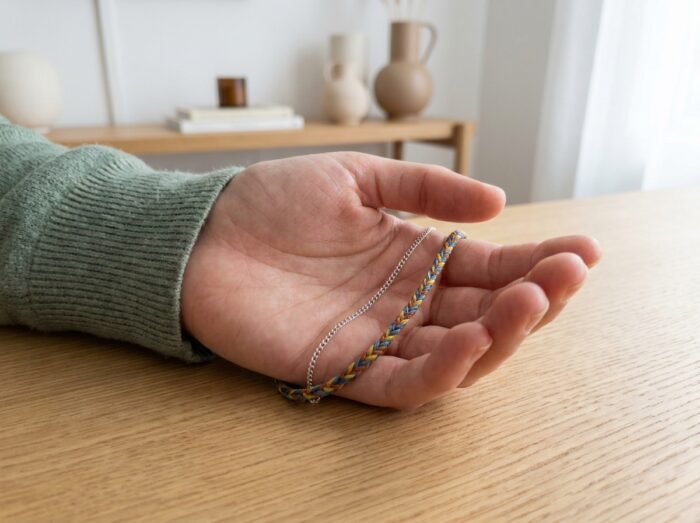
Colorful or Discreet Bracelet: Adapting the Jewelry to One’s Clothing Style
The color of the bracelet plays a practical as well as aesthetic role. A colorful cord catches the eye and functions as a full accessory. It easily pairs with a summer outfit or a casual look but may clash with a strict professional dress code.
A thin metallic bracelet (gold, silver, steel) blends into most contexts without requiring matching consideration. It is the default choice for those who do not want to adapt their jewelry to their outfit.
The underestimated criterion is patina. A colorful cord visibly ages: the hue fades, and the fibers show wear. This wear can have charm (a lived-in look, travel bracelet) or appear neglected depending on the context. A thin metallic bracelet ages less visibly than a textile cord, making it a better candidate for several months of wear without replacement.
Concrete Selection Criteria for a Daily Bracelet
Rather than reasoning in terms of trend, a sustainable choice relies on a few practical questions:
- Will the bracelet be worn underwater regularly? If so, prioritize stainless steel or a synthetic cord (nylon, polyester) rather than cotton
- Is the skin sensitive to nickel? Check REACH compliance and prefer surgical alloys or cords without metal parts
- Should the bracelet go unnoticed in a professional environment? A thin chain in a neutral tone will be more versatile than a bright cord
- Does the budget allow for replacing the jewelry? A colorful cord is inexpensive and easily replaced, while a steel or gold bracelet represents a more durable purchase
The right jewelry for everyday wear is not the most beautiful in the display case; it is the one you forget you are wearing. A material that holds up, a clasp that does not interfere, a color that goes everywhere: these three points are enough to distinguish a cord from a thin chain, without needing to follow the latest trend.