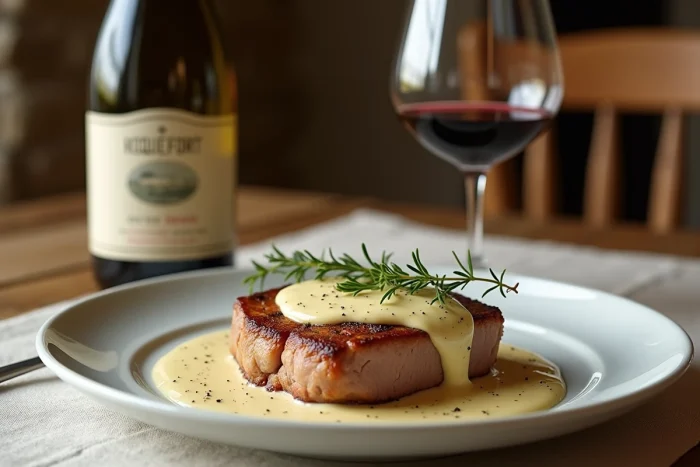
Pork tenderloin with Roquefort presents a pairing challenge that most guides resolve too quickly. The Roquefort sauce brings a marked saltiness, an aromatic power linked to Penicillium roqueforti, and a creamy fat that coats the palate.
Pork, on the other hand, remains a meat with tender flesh and a subtle flavor. Finding a wine that respects both without overpowering one or being dominated by the other requires reasoning in terms of structure, acidity, and residual sweetness.
Acidity, sweetness, and saltiness: the technical triangle of pairing
The main difficulty comes from the saltiness of the Roquefort. A tannic red wine directly conflicts with the salt: the tannins seem drying, bitter, and the salty persistence of the cheese amplifies this sensation. We advise against any oaky and structured red for this precise reason.
The most effective lever remains the residual sweetness of the wine. A sweet white or a natural sweet wine provides a sweet counterpoint to the salt that rounds out the encounter in the mouth. The acidity of the wine plays a secondary but necessary role: it cleans the fat from the cream and rekindles the appetite between bites.
We also observe a parameter often overlooked: the serving temperature. A sweet white served too cold loses its roundness and fruit, allowing the Roquefort to dominate. Between 10 and 12 °C, the wine expresses its sweetness and volume better.
To explore possible combinations between this dish and different vintages, the Mon Blog Cuisine site details several options depending on the chosen sauce profile.
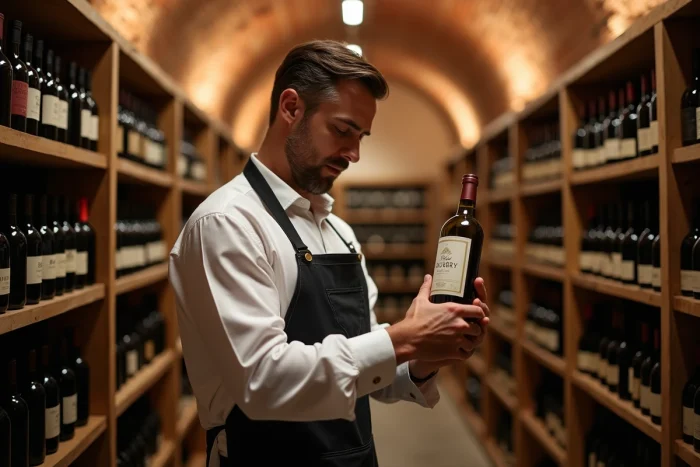
Sweet whites from the Southwest and sweet wines: the safest choice
A late-harvest Jurançon works remarkably well. Its profile combines aromas of candied citrus, bright acidity, and a sweetness that frames the Roquefort without masking it. The petit manseng grape, vinified in late harvest, produces wines that are sufficiently lively not to weigh down a dish already rich in fat.
Sauternes remains the classic pairing with Roquefort, but it can pose a dosage problem with the tenderloin. Its power and liqueur are suitable for cheese alone on a platter. Paired with pork and cream, Sauternes risks saturating the palate by the third bite. We then recommend choosing a lighter vintage or a Monbazillac, which offers a similar aromatic range with often more moderate liqueur levels.
Oxidative Savagnin and Chardonnay from Jura
Starred restaurant sommeliers report a growing preference for oxidatively aged whites from Jura with blue cheeses. The Savagnin under voile develops notes of nuts, curry, and Swiss chard that interact with the Roquefort in terms of complexity rather than sweet-salty opposition.
The natural acidity of Savagnin, combined with a rich texture in the mouth, balances the cream of the sauce. This type of pairing requires a wine aged for at least four to five years for the oxidation to sufficiently round out the profile.
Red wine with pork tenderloin and Roquefort: strict conditions
A red can work, but the constraints are precise:
- Soft and melted tannins, never new oak. A young and structured red will render the sauce metallic in the mouth.
- Mature and generous fruit to counterbalance the saltiness. Southern grape varieties (Grenache, Mourvèdre) are better suited than Cabernet Sauvignon.
- Moderate acidity to avoid accentuating the bitterness of the Penicillium. A Côtes-du-Rhône-Villages from a sunny vintage, with polished tannins, yields good results.
Piedmontese Barbera d’Asti is gaining popularity for this type of pairing. Its fruity acidity and discreet tannins provide interesting versatility with powerful blue cheeses. According to Decanter Magazine, this grape sometimes surpasses Burgundies in flexibility for these pairings.
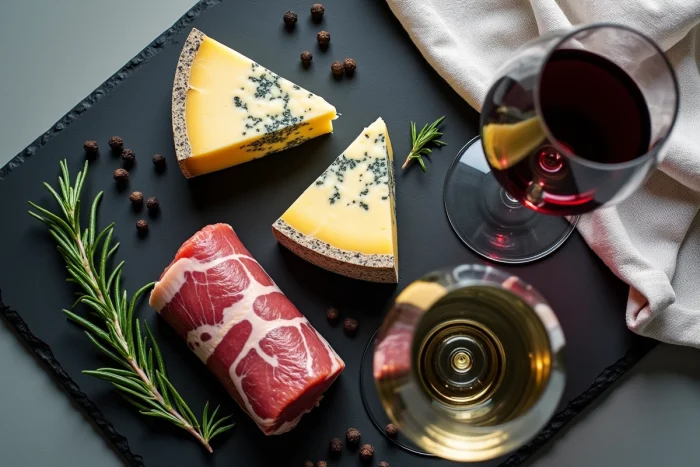
Natural wines and light profiles: a recent avenue for pork with Roquefort
The Hachette Wine Guide notes a rising trend in pairings with light natural wines from Burgundy to balance the richness of Roquefort without dominating the tenderness of the pork. Pinots noirs vinified without added sulfur, from cool terroirs like Saint-Véran or Givry, produce airy reds, lightly extracted, whose crunchy fruit pairs well with the cream.
This approach assumes a wine served slightly chilled, around 14 °C, to preserve its freshness. The risk with a poorly stabilized natural wine remains the aromatic deviation, which can clash with the Penicillium of Roquefort. We recommend prioritizing cuvées from winemakers who have a good handle on their aging processes.
Bubbly alternatives
A brut Crémant from Jura or a demi-sec sparkling Vouvray offers a less conventional option. The bubbles provide a refreshing sensation that compensates for the fat of the sauce, while a slight residual sweetness connects with the Roquefort. This choice is particularly suitable when the pork tenderloin is served in light portions, as an appetizer or tapas.
Adapting the pairing according to the garnish of the tenderloin
The Roquefort sauce does not exist in isolation. The accompaniments modify the balance of the dish and thus the choice of wine.
- With mushrooms (ceps, chanterelles), the earthiness of the dish leans towards a light red from the Loire, like a fruity Chinon, whose vegetal notes complement the mushrooms.
- With fresh pasta or a purée, the additional fat calls for a wine with high acidity. A late-harvest Alsace Riesling performs well in this role.
- With green vegetables (beans, broccoli), the chlorophyll and vegetal bitterness require a lively dry white. A Sancerre or a Pouilly-Fumé provides the necessary tension, provided the Roquefort sauce remains dosed with restraint.
The dosage of the sauce conditions both the pairing and the choice of wine. A light Roquefort sauce, thinned with cream, tolerates more discreet wines. A concentrated sauce, where the cheese dominates, demands a wine with enough body not to disappear.
Pork tenderloin with Roquefort remains a dish where sweet white wine prevails over red in most configurations. Late-harvest Jurançon, Monbazillac, Jura Savagnin: these three options cover the majority of situations, from everyday dinners to festive meals.