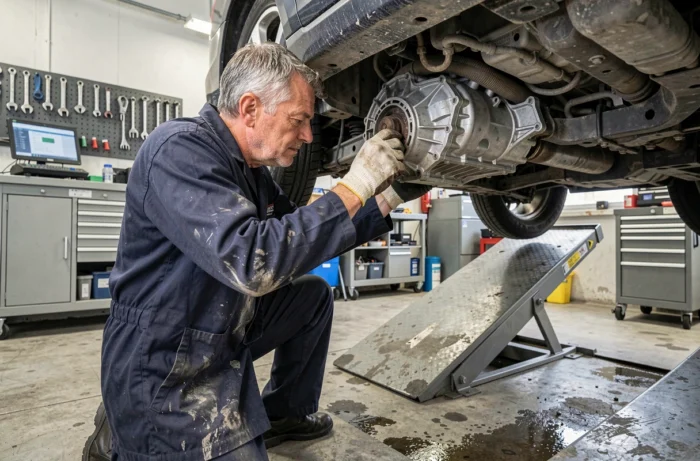
The DSG 7 gearbox is fitted to millions of Volkswagen Group vehicles, from the Golf to the Seat Leon and Škoda Octavia. Its reputation swings between praise for its quick shifts and criticism over costly failures. The “DSG7” label actually covers several transmission variants with distinct characteristics, making generalisations risky unless you identify the exact gearbox code fitted to the vehicle.
DQ200, DQ381, DQ500: identifying your DSG 7 gearbox code
It’s a common mistake to treat “the” DSG 7 as a single, uniform gearbox. The DQ200 uses dry clutches, while the DQ381 and DQ500 use wet clutches running in oil. This difference affects everything else: wear, maintenance, repair costs and behaviour in urban driving.
| Gearbox code | Clutch type | Maximum torque supported | Scheduled oil change |
|---|---|---|---|
| DQ200 | Dry | Up to 250 Nm | Not specified as standard |
| DQ381 | Wet | Over 250 Nm | Yes, according to the manufacturer’s schedule |
| DQ500 | Wet | Over 350 Nm | Yes, according to the manufacturer’s schedule |
An online maintenance guide for “the DSG 7” may therefore not apply to your vehicle. The fact that no oil change is scheduled for the DQ200 does not mean the DQ381 or DQ500 can go without one.
Checking the exact code (stamped on the casing or retrievable via the VIN) is the first step before any work is carried out. An article covering the reliability and problems of the DSG 7 gearbox for each variant can help you understand the risks associated with each model.
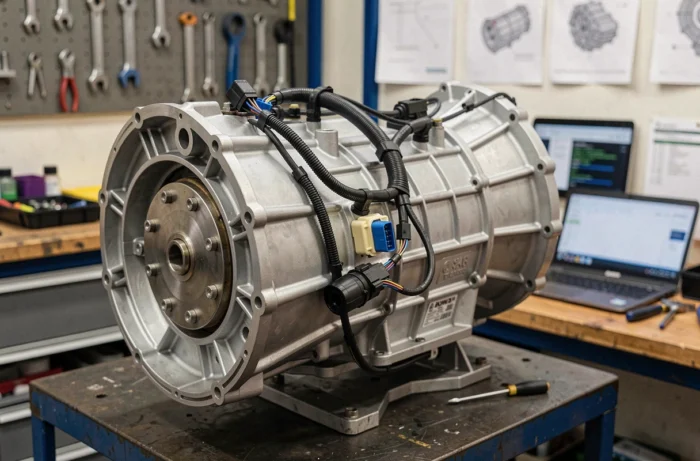
Common DSG 7 DQ200 faults: symptoms and warning signs
The DQ200, fitted to lower-torque petrol and diesel engines, accounts for most negative reports. Its dry clutches wear mechanically without the cooling provided by an oil bath.
Jerking and hesitation when pulling away
A slight jerk when pulling away or a brief delay before the gear engages can be characteristic of normal dry-clutch operation. Pronounced jerking or loss of gears warrants a diagnostic check. The distinction is subtle, but it can help you avoid replacing a mechatronic unit that is still working properly.
The 2013 recall: synthetic oil and electrical risk
In 2013, Volkswagen launched a worldwide campaign covering around 1.6 million vehicles fitted with the DQ200. The issue was an electrical risk linked to the synthetic oil used in the gearbox, which was subsequently replaced with mineral oil. When buying a used car, the sensible approach is to check the recall history using the VIN rather than assume that a vehicle from a particular model year has been repaired.
What to look out for during a test drive
- Test the gearbox when cold: dry clutches reveal faults in the first few minutes, before the temperature stabilises operation.
- Carry out slow manoeuvres (parking, parallel parking): jerking in forward or reverse at very low speeds is more revealing than a gear change on the motorway.
- Observe its behaviour in prolonged stop-and-go traffic: if the gearbox hesitates, slips or causes unusual vibrations after several stop-start cycles, the clutch is probably nearing the end of its life.
Urban versus road driving: the hidden mileage factor
Two DSG 7 DQ200 gearboxes with the same mileage can be in radically different condition. Heavy urban use accelerates dry-clutch wear because of repeated stop-and-go demands, whereas road driving keeps a gear engaged over long distances without additional friction.
A vehicle that has covered most of its mileage in town deserves a closer inspection than a road-driven example with the same reading on the odometer. Mileage alone is not enough to assess the condition of the transmission.
What to check before buying a used DSG 7
- Service history: a gearbox oil change (even if not specified for the DQ200) is often a sign of an attentive owner.
- Where the vehicle is registered and the types of journeys reported by the seller: a car registered in a densely populated city centre has probably undergone more clutch engagement and disengagement cycles.
- Manufacturer recall records: these can be checked using the VIN through the Volkswagen, Audi, Seat or Škoda dealer network.
- An electronic gearbox diagnostic: the mechatronic unit may store fault codes that do not trigger a warning light and can only be found using diagnostic equipment.
DSG 7 gearbox maintenance: what the manufacturer’s schedule doesn’t always tell you
The absence of an oil change from the maintenance schedule does not mean the gearbox never needs fresh oil. The DQ200 casing still contains lubricant for the mechanical components (gears and synchronisers). Several specialists recommend changing it periodically, taking care to use the oil specification that matches the gearbox code.
For the DQ381 and DQ500, oil change requirements vary depending on the vehicle and model year. Using the wrong oil or filling to the wrong level can itself cause problems. Following the schedule for the exact gearbox code is the only reliable approach; it’s best to use the manufacturer’s dealer network or a transmission specialist rather than rely on generic advice.
The cost of a DSG oil change is modest compared with replacing a mechatronic unit or clutch kit. Treating this maintenance as a preventive investment rather than an optional expense can extend the transmission’s service life.
The DSG 7 is neither a ticking time bomb nor an infallible piece of engineering. Its longevity depends on the gearbox code, driving conditions and maintenance history. When buying used, a buyer who identifies the exact variant, checks recalls using the VIN and tests the gearbox from cold in urban conditions has far more information than a mileage reading alone can provide.