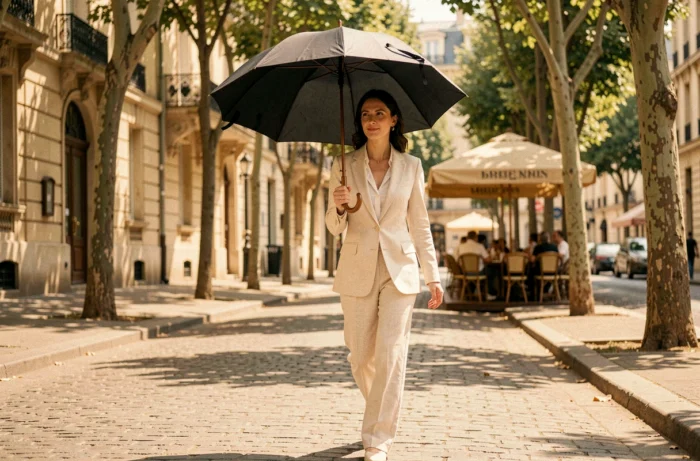
The black umbrella has been a staple of city attire for more than a century. In summer, opinions are divided: some find it too dark in the sunshine, while others swear by it, including for UV protection. What does the available research say about how effective it really is, and how does it compare with other colors when rainy weather gives way to heat?
UV protection from black umbrellas: what the research measures
A 2013 study published in JAMA Dermatology examined 23 umbrellas and parasols and found that the black umbrellas tested blocked more than 90% of UV rays. Protection varied by fabric and model: color alone is not a certification.
The same analysis notes that judging protection by looking at light passing through the fabric is not a reliable way to estimate UV filtering. The fabric’s appearance can be misleading.
Another study, published in 2017 in JAMA Dermatology, compared using a beach umbrella alone with using sunscreen alone. Both strategies, when used on their own, left people vulnerable to sunburn because UV rays scattered from the sides or reflected off the ground are not blocked by the fabric.
Understanding why people prefer black umbrellas in summer means looking beyond color to examine the fabric’s construction and any treatments applied to it.

Black versus light colors: a comparison of their properties
Competitors often present black and white as a simple either-or choice. The available data paints a more nuanced picture.
| Feature | Black umbrella | White or light-colored umbrella |
|---|---|---|
| UV absorption | High (black absorbs almost the entire light spectrum) | Lower (light shades reflect more light but let more UV rays through) |
| Feeling of heat under the canopy | More pronounced without a special treatment | Cooler, as it reflects visible light |
| Effect of UPF treatment | Enhances an already high level of absorption | Makes up for naturally lower filtering |
| Visibility of dirt | Dust is visible; rain spots are less noticeable | Dust is less noticeable; rain or mud spots are visible |
| Versatility with outfits | Works with most outfits | More limited, with a casual or summery feel |
Black absorbs more UV rays, while white offers better basic thermal comfort. An UPF 50+ treatment levels the difference in protection between the two colors. It’s the fabric, not the shade, that makes the difference.
UPF rating and fabric treatment: what really matters
Manufacturers now offer canopies with a silver coating or an anti-UV treatment on the inner surface. Some models sold in Japan and the United Arab Emirates combine a black outer canopy with a reflective inner coating.
This double layer is designed to achieve two goals at once:
- The black outer surface absorbs UV rays before they pass through the fabric, limiting direct exposure to the skin
- The silver inner coating reduces the heat felt under the umbrella by reflecting infrared rays outward
- The final fabric’s UPF (Ultraviolet Protection Factor) rating depends on the weave density, fiber type and chemical treatment applied—not just its color
Judging an umbrella by its color without checking its UPF rating is like choosing sunscreen based on the feel of the tube.
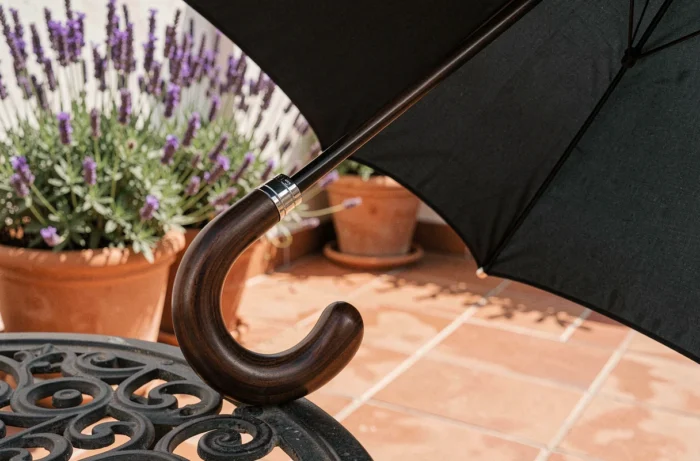
Limits of protection from an umbrella alone
Even a black UPF 50+ umbrella only protects the area directly beneath its canopy. UV rays reflected off asphalt, sand or water can reach the skin from below and from the sides.
The 2017 study in JAMA Dermatology confirms this: a parasol alone is no substitute for sunscreen. Using both remains the most reliable way to limit skin exposure in summer.
Black umbrellas and summer style: it’s about the look, not the season
The usual criticism of black umbrellas in summer is that they look like winter accessories. Fashion trends offer a more nuanced perspective.
Their neutral color works with lightweight outfits, patterned dresses, summer linen suits and casual looks alike.
A brightly colored umbrella needs to coordinate with the rest of an outfit. Black doesn’t. This freedom from color-matching constraints explains its enduring place in both men’s and women’s wardrobes.
Caring for and maintaining black umbrella fabric
Black fabric hides the wear caused by repeated folding more effectively. Seams and the internal frame age in the same way regardless of color, but black conceals visible fabric wear for longer than a light or pastel canopy.
Dried rain spots, on the other hand, are more noticeable on dark fabric. A quick wipe after use is all it takes to keep the umbrella looking neat.
The black umbrella remains a summer staple not out of tradition, but because the data supports it: it absorbs more UV rays than light-colored fabrics, provided the fabric is suitable. Thermal comfort, meanwhile, depends on how the canopy is treated. A black model with a reflective inner coating combines UV filtering with a cooler feel, making color a secondary consideration compared with construction.