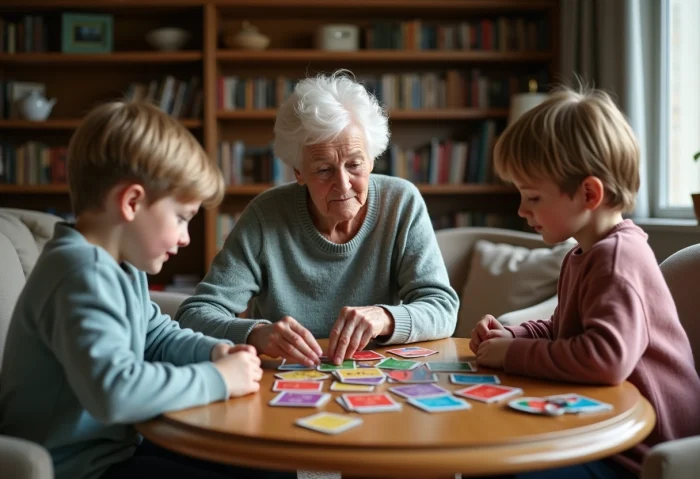
A board divided into five spaces, tokens circulating, rules that vary from one family to another: the Nain Jaune has never been a fixed game. The so-called “classic” version of Nain Jaune uses a board with special spaces and requires a precise distribution of tokens at the start of the game. However, some groups apply variations where the value of the tokens on each space differs or where certain cards provide bonuses, altering the balance of the game.
The method of counting points, often a source of confusion, can change from one variant to another, particularly depending on how tokens are redistributed during the final sequences. These differences directly influence the strategy and pace of the games.
Nain Jaune: A Timeless Board Game with Simple Rules
Emerging during the Second Empire, the nain jaune stands as a pillar of traditional board games in France. It brings together families and friends, young and old, around a vibrant board, a wooden box worn by generations, and handfuls of tokens that circulate from hand to hand. The principle is clear: it relies on a classic card game, sequences to chain, and the rising tension as the table empties.
The Nain Jaune board, easily recognizable with its five marked spaces (queen of spades, jack of clubs, king of hearts, ten of diamonds, seven of diamonds), structures each round. All players receive the same amount of tokens and bet on each space. The game begins: the first player plays a card, and the others follow the sequence. When one of them can no longer play the requested color, the round stops. These components of the game, often made in France, embody this family tradition, passed down and adapted over the decades.
The rule favors simplicity. Playing cards well, anticipating opponents’ reactions, betting without excess: that’s what makes the difference. But one point often crystallizes debates: how to count points in nain jaune? The way to score varies according to habits, with some groups assigning new values to cards or adjusting the way tokens are redistributed. For those who want to go further, the article “Les variantes de la règle du jeu Nain jaune à découvrir – Sparh” provides a detailed overview, shedding light on the subtleties of scoring. This plurality of approaches, far from muddling the games, maintains the curiosity and appeal of Nain Jaune at tables across France.
What are the Main Variants of Nain Jaune and How Do They Affect the Game?
The strength of nain jaune lies in its adaptability. From one generation to another, from one circle of friends to another, the game evolves, enriched with small touches and house variants. Some modify the way tokens are distributed or the value of combinations, while others reinvent the order of play or introduce new rules for re-betting.
In the most played version, each player bets on the spaces queen of spades, jack of clubs, king of hearts, ten of diamonds, and diamond nain jaune. However, the redistribution of winnings can change, especially if several players empty their hands in a tie, or when certain cards are played in the final moments. The number of tokens assigned to each space can vary from group to group, altering the dynamics of betting and prompting everyone to rethink their game management.
To speed up the pace, some families opt for a reduced deck of cards, which multiplies quick rounds and tightens the competition. Others prefer to change the first player each turn or introduce new challenges, such as winning a space by playing king of hearts and queen of spades together. These adjustments, far from being secondary, give the board game an unexpected depth, further enhancing the transmission between generations through the wooden box.
Ultimately, each group of players shapes its own Nain Jaune: the tension, uncertainty, and enjoyment of twists depend on the chosen variants. It is this freedom that keeps the game alive, balancing respected tradition and embraced creativity.
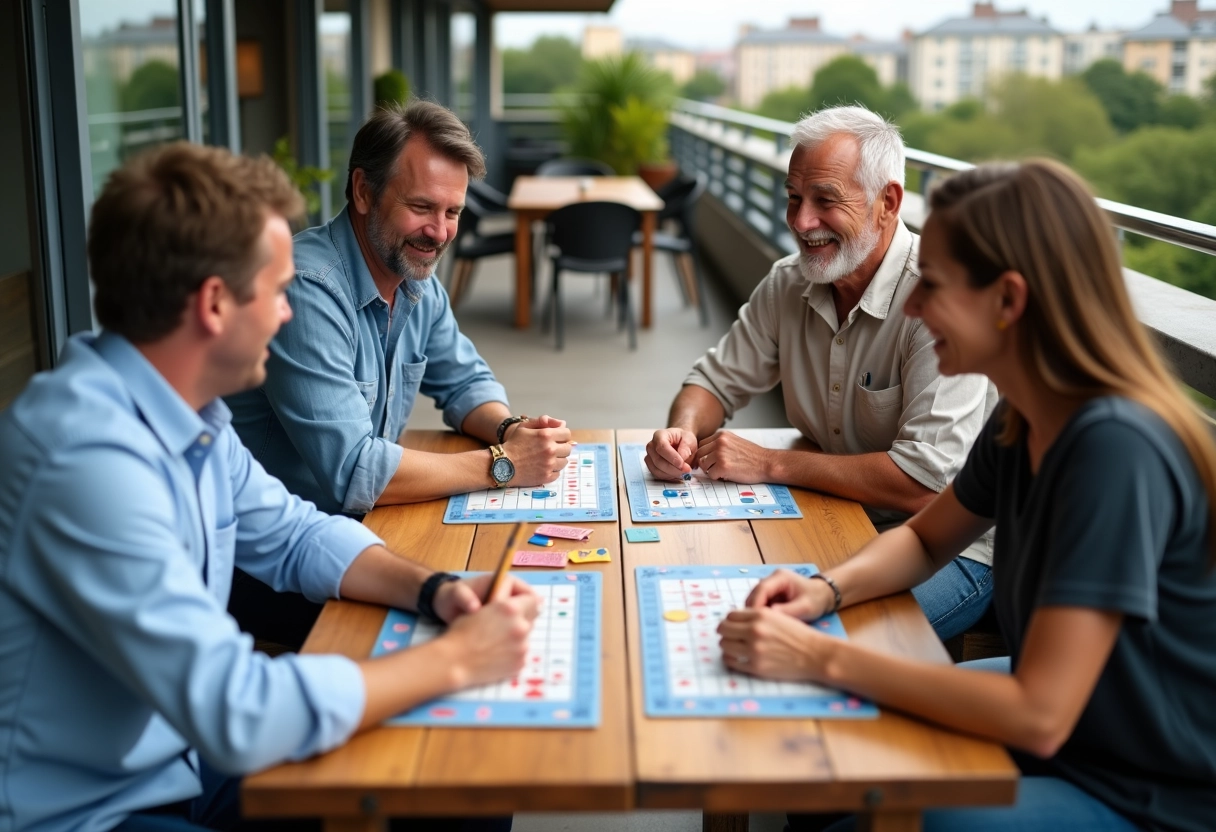
Counting Points Accurately: Tips and Examples to Master Scoring
Keeping score in nain jaune requires a minimum of method. The Nain Jaune board displays five spaces, each associated with a master card: queen of spades, jack of clubs, king of hearts, ten of diamonds, and the famous diamond nain jaune. As soon as one of these cards is played, its owner collects the tokens placed on the corresponding space. Forgetting a gain or a payment can upset the balance of the game.
When it comes to counting, the cards still in hand weigh heavily: numbers are worth their face value, face cards ten points, and aces eleven. Those who empty their hands score positive points, while others incur negative points. The first player ensures the smooth running of the round to guarantee a fair distribution of gains and losses.
To make counting smoother, here are a few tips to implement:
- Ensure at each turn the value of the tokens wagered or won.
- Check each player’s hand before starting a new deal.
- Keep a close eye on the first card of the draw pile to avoid any disputes.
A simple notebook or a scoreboard will suffice to track everyone’s progress. Each player counts their cards face down, and verification is done collectively, eliminating misunderstandings. This is an opportunity for the younger players to practice mental math, and for everyone to experience that particular tension where every point gained or lost can change everything. The magic of Nain Jaune always operates where least expected, at the turn of a disputed count or a final token slipped onto the right space.