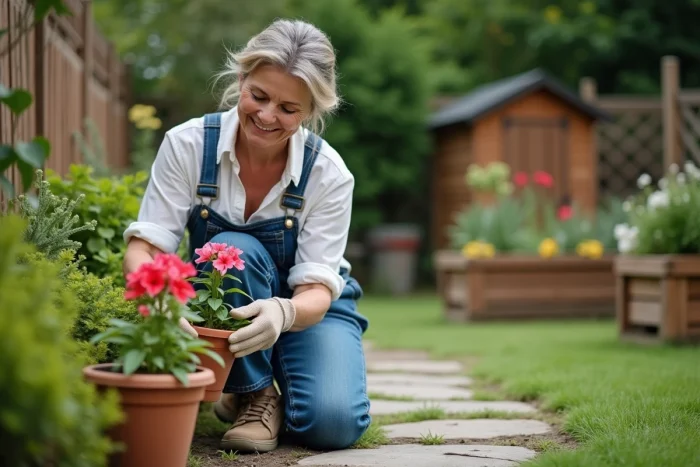
The layout of domestic green spaces rarely follows a universal logic. Contrary to popular belief, some plants adapt to the smallest nooks, while others, known for their robustness, fail in conditions that seem ideal on paper. The terrain’s relief, soil composition, or water circulation impose unsuspected constraints.
Design choices also encounter sometimes unexpected local regulations, dictating the height of hedges or the minimum distance to be maintained between two plantings. A methodical organization and consideration of these realities determine the success of any outdoor space.
The essential foundations for designing a harmonious garden
To build a garden that gracefully endures through the seasons, it all starts with an honest observation of your land. Relief, sunlight, soil texture: these details already outline the roadmap. Create a diagram, even a rough one. Visualize where to place paths, the terrace, a flower bed, a vegetable patch, or a relaxation area. The key: each space must find its purpose, and the movement from one point to another should flow naturally.
A well-thought-out arrangement promotes natural circulation. Ensure easy access to strategic points: faucet, shed, composter. Harmony arises from coherence. Regarding watering, adapt each area: the vegetable garden will appreciate a drip system, while flower beds will benefit from a rainwater reserve. Lighting, on the other hand, should be discreet yet present enough to extend evenings or secure movement.
To find inspiration and structure your project, specialized resources like clicgarden.net offer concrete ideas. This site, “Clic Garden – Little corner of green paradise,” provides practical advice for organizing your plan and selecting elements suited to your constraints.
To create a vibrant and balanced garden, play with shapes, textures, and colors. Mix evergreen foliage with seasonal blooms. Consider the nature of the soil and the rhythm of the seasons. A garden is never static; it evolves with you, year after year.
What choices should you prioritize to adapt your layout to the space and your desires?
The ideal project takes shape at the intersection of available space, terrain configuration, and your expectations. In the city, every square meter counts. Opt for border flower beds to define the space, favor compact or climbing plants that emphasize height rather than width.
A generous plot multiplies possibilities: create a relaxation area under the trees, a play corner for children, a vegetable garden, or even a flower meadow welcoming pollinators.
Exposure and soil composition guide the choice of plants. Dry areas readily welcome heat-resistant plants, while shaded corners prefer understory species.
Do you dream of a Japanese or Mediterranean garden? Incorporate pebbles, sculpted shrubs, and a few carefully chosen trees to create rhythm and invite contemplation.
The style of your garden should align with your lifestyle. Families prefer robust and open spaces for children to run around. Biodiversity enthusiasts opt for colorful flower beds and wilder corners rich in life. For every use, there is a response: the garden becomes a reflection of your desires and adjusts to your habits.

Concrete tips to easily transform your outdoor space, even without experience
You don’t need to be an expert to design a welcoming outdoor space. A simple sketch is enough to position the main areas: relaxation, dining, games. Paths naturally emerge, connecting the different living zones. Favor accessible materials, such as gravel or stepping stones, which can be easily installed and structure the whole.
To organize the space, turn to easily modifiable elements: planters, raised beds, small dry stone walls. They add relief and allow you to play with heights effortlessly. Plant a few perennials or border flower beds: low-maintenance and providing an immediate frame.
Here are some ideas to simplify maintenance and enhance your garden daily:
- Install an economical and clever watering system, such as a drip system connected to a rainwater collection tank.
- Select robust varieties that require little water to limit chores.
- Opt for solar lighting: it secures movement and creates a warm atmosphere as night falls.
It’s all in the details: a well-chosen mulch reduces water needs, lightweight furniture can be moved as desired, and a few decorative objects personalize the whole. Every gesture counts in shaping an outdoor space that reflects your image, without breaking the bank or multiplying efforts. Let yourself be guided by your uses, adapting gradually. The garden is shaped at your pace, without pressure or fixed recipes. Ultimately, every patch of greenery tells a unique story—yours.