
A round-the-world trip differs from a simple stay abroad by its duration (several months), the number of countries crossed, and the diversity of health, climatic, and administrative contexts encountered. Organizing such a project requires managing constraints that, for a classic trip, are handled in isolation: visas, vaccinations, multi-country insurance, budget in multiple currencies, itinerary flexibility.
Health and security monitoring during a round-the-world trip
Most preparation guides focus on the steps before departure: the timeline, vaccines, bookings. What is less addressed is the active monitoring once on the road.
In September 2026, the WHO reported an outbreak of Ebola virus disease in the Democratic Republic of the Congo, with a risk deemed very high in the country and high in neighboring countries. Such alerts can render a segment of the itinerary impassable overnight. Travelers who planned to cross Central Africa during this period had to revise their routes.
Health monitoring must remain active throughout the journey, not just during preparation. Regularly consulting WHO bulletins and country sheets from the Ministry of Foreign Affairs allows for anticipating border closures or entry restrictions. Risks related to cholera, meningitis, or monkeypox are frequently updated, and the situation in a given region can change within weeks.
The same reasoning applies to weather phenomena. An itinerary crossing Southeast Asia during the monsoon or East Africa during an El Niño episode can become impassable: roads cut off, flights canceled, accommodations inaccessible. Resources like les-voyageurs.fr centralize useful feedback to adjust a route based on actual conditions.
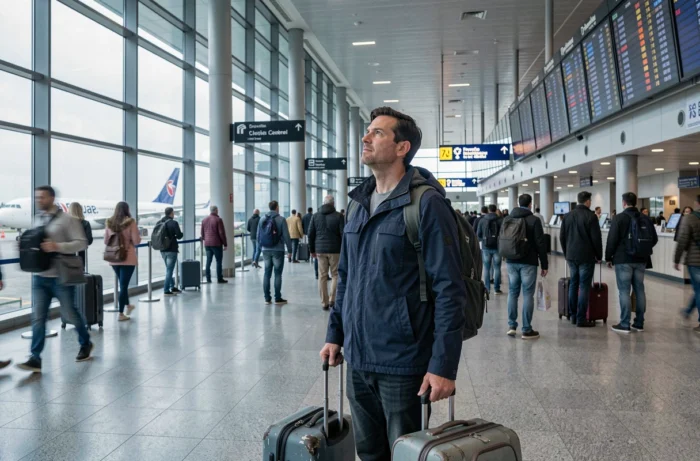
Building a round-the-world itinerary with fallback stops
Fixing a complete itinerary several months before departure is a common mistake. Round-the-world tickets (like airline alliances) often impose a direction of travel and a limited number of stops, but most allow for date changes.
Planning one or two fallback stops per continent changes the game. A fallback stop is a well-connected city with adequate medical infrastructure and a consulate, where the traveler can retreat if a subsequent segment becomes inaccessible. Concrete examples include:
- In East Africa, Nairobi serves this role due to its international airport, connections to Europe, and hospitals with acceptable standards.
- In Southeast Asia, Bangkok offers flight connections to virtually all destinations in the region and a recognized hospital network.
- In South America, Lima or Bogota allow for reorienting an Andean route without starting from scratch.
This fallback logic assumes not booking all accommodations in advance. Booking the first two or three weeks, then operating with rolling blocks of reservations, provides the necessary margin to react.
Multi-country travel budget and insurance: the items to negotiate
The budget for a round-the-world trip is not just a global envelope divided by the number of months. The cost of living varies significantly between Southeast Asia and Scandinavia, for example. The sequence of destinations directly influences cash flow.
Placing the most expensive countries at the beginning of the journey allows for enjoying an intact budget and adjusting the spending pace afterward. The opposite (ending with Australia or Japan) often puts travelers in difficulty during the last weeks.
Round-the-world insurance: what contracts poorly cover
Standard credit card insurances generally cap coverage duration at a few months and exclude certain areas considered high-risk. For a round-the-world trip, a specific multi-country contract is necessary. Points to check before signing include:
- The actual geographical coverage: some contracts exclude countries under high-level health alerts, which can pose problems on the road.
- Medical repatriation and its cap: repatriation from an isolated area costs significantly more than from a well-connected capital.
- The travel interruption clause: it reimburses prepaid services if the traveler must shorten their journey for medical or security reasons.
- Risky sports and activities (diving, high-altitude trekking, motorcycling) are often excluded by default and require a paid option.

Digital travel journal and itinerary tracking
A digital travel journal is not just for keeping memories. It is a management tool. Centralizing booking confirmations, copies of identity documents, insurance contract numbers, and consular contact information in a single application avoids rummaging through emails at each border crossing.
Synchronizing this journal offline is a technical point often overlooked. In many regions crossed during a round-the-world trip, internet connectivity is intermittent or absent. Applications that only work online become useless when the traveler needs them most, typically at a border crossing or in a bus terminal without Wi-Fi.
Some experienced travelers also keep a paper version of critical documents (passport identity page, insurance certificate, medical prescription translated into English). Digital devices can fail, be stolen, or get wet. Laminated paper withstands most field situations.
A successful round-the-world trip relies less on the perfection of the initial plan than on the ability to modify it. Travelers who set off with a rigid itinerary and a budget calculated to the day often find themselves in difficulty when faced with an unexpected health, weather, or administrative issue. Maintaining financial and logistical flexibility remains the factor that separates a memorable trip from a forced journey.