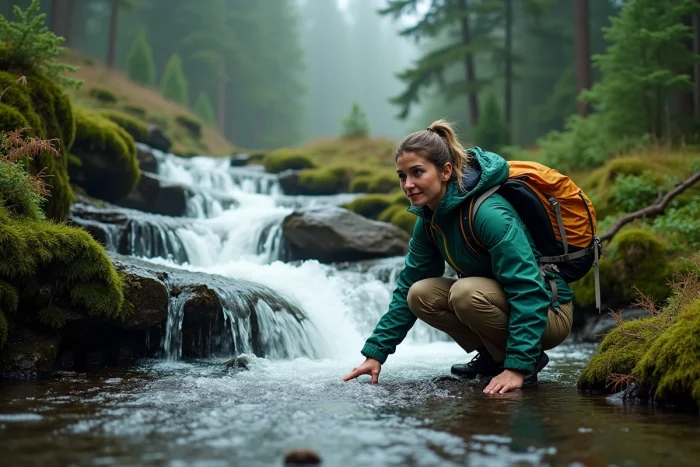
Faced with a torrent rushing down a rocky wall, one often hesitates over the right word. Waterfall or cascade, the distinction may seem trivial, but it significantly changes the preparation for a hike: level of difficulty, equipment, possibility of swimming, risks at the foot of the site. Understanding this difference between waterfall and cascade allows for better anticipation of what awaits us on the ground.
Safety at the foot of a waterfall: how vertical drop changes things
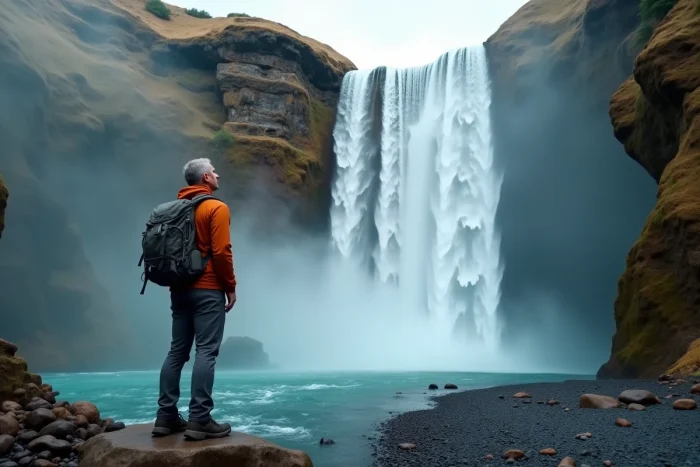
When arriving at the base of a sheer waterfall, the first instinct is often to approach the pool. The problem is that the vertical column of water generates a powerful back current at the point of impact. The water plunges, sinks, and then rises again, creating a roll beneath the surface that can keep a swimmer underwater.
Managers of natural areas regularly report that waterfalls are more often associated with high-risk sites: strong currents, debris, swimming bans. On the trail to the Druise waterfall in the Vercors or the Pissoire waterfall in the Drôme, warning signs and sometimes barriers can be found.
In practice, a simple rule can be remembered: if the water falls in a single block without a visible intermediate ledge, keep your distance from the receiving pool, even if the water seems calm on the surface. The apparent calm often masks turbulence below.
To understand the difference between waterfall and cascade in a safety context, one must observe the verticality of the flow and the presence or absence of rocky steps that dissipate the energy of the water before the pool.
Tiered cascade and swimming: spotting family-friendly sites
A cascade distributes its energy over several tiers. Each rocky step slows the flow, oxygenates the water, and creates intermediate pools. It is precisely this configuration that makes some sites suitable for supervised swimming.
The Tufs cascade in the Jura illustrates this principle well. Water flows over successive limestone tufa formations, forming shallow basins where families swim in summer. The access trail is marked, and the difficulty remains low.
The tiered cascades of the Vosges (like those documented by the Remiremont-Plombières tourist office) offer a similar profile: rocky steps that create resting areas for both the water and the hiker. One can settle down, dip their feet, and take photos without exposing themselves to a dangerous current.
Terrain criteria for evaluating a waterfall before swimming
- Observe the number of visible tiers: the more there are, the more energy is dissipated before the final pool
- Check the color of the water at the foot of the last step: white and turbulent water indicates strong mixing, while green or clear water indicates a calmer pool
- Look to see if others are swimming and if facilities (stairs, handrails) exist, which generally indicates a site validated by local managers
Visiting season and type of experience: waterfall and cascade are not equal
The choice between a hike to a waterfall or a cascade also depends on the season and what one is seeking.
A vertical waterfall offers its most impressive spectacle during the snowmelt, when the flow is at its maximum. The volume of water concentrated at a single drop point produces a roar and a plume of mist that justifies the detour. In contrast, by late summer, some waterfalls reduce to a disappointing trickle.
Tiered cascades react differently to flow variations. Even with moderate flow, the water spreading over the tiers remains photogenic, and the pools maintain a sufficient level for swimming. Cascades are therefore a more consistent destination throughout the season.
Adapting the experience to the type of site
- Photography: waterfalls offer spectacular long-exposure shots due to the concentrated volume, while cascades allow for multiple-plan compositions with the tiers
- Swimming: favor tiered cascades in summer, avoid waterfall pools unless local indications suggest otherwise
- Wildlife observation: the areas around tiered cascades often shelter diving dippers and salamanders, which appreciate moderately flowing wet areas
- Contemplation and picnicking: cascades offer more rocky ledges to settle on, whereas waterfalls often impose a unique viewpoint from a lookout
Route difficulty: how the toponym influences the hike
On GPS tracking platforms like Komoot or AllTrails, feedback from hikers shows a clear trend: the word “cascade” is often used as a generic term, even when the official toponym is “waterfall of…”. This discrepancy between the administrative name and common usage can skew the assessment of a route’s difficulty.
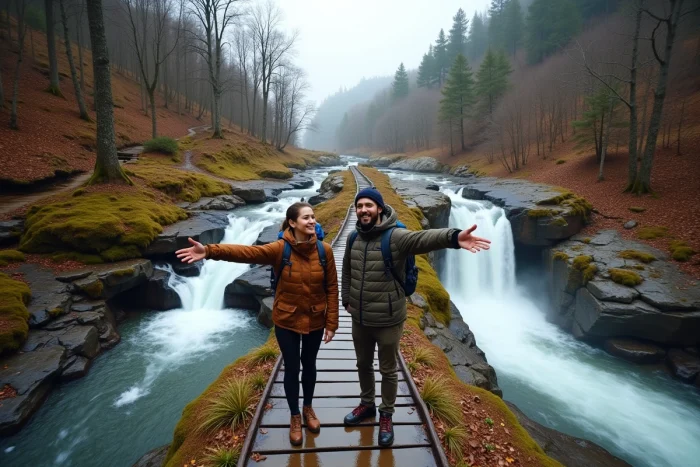
Specifically, a trail leading to a waterfall often involves a more pronounced elevation gain over a short distance, since the rocky wall that creates the waterfall translates into steep terrain nearby. Trails are frequently equipped with handrails or cables, and the ground can be slippery due to spray.
A trail to a tiered cascade more often follows the watercourse with a gradual elevation gain. The difficulty is spread out, and the terrain is less steep. The walk to the Tufs cascade in the Jura, for example, takes a forest path accessible without technical equipment.
When preparing a route, checking the elevation profile of the trail provides more reliable information than the name of the site. Feedback varies on this point depending on the regions, but cross-referencing the toponym with the actual elevation gain remains the safest method to avoid unpleasant surprises.
The next time a guide mentions a “cascade” or a “waterfall,” looking closely at the map before lacing up your shoes allows for adjustments in gear, timing, and expectations. A lexical detail that, on the ground, makes all the difference between a family walk and a challenging outing.