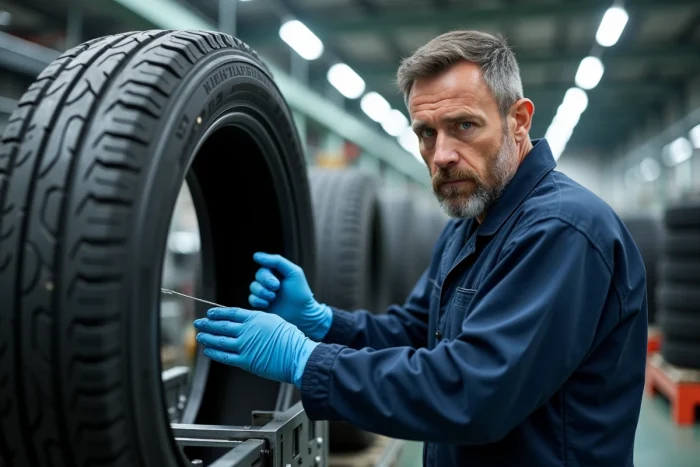
A simple number: 1981. That year, Michelin swallowed up Kleber and decided to make it the backbone of its “accessible” offering in Europe. Since then, Kleber tires have predominantly come from French and European sites, supported by precise industrial processes aligned with Michelin’s philosophy.
Kleber, a French story in the service of innovation
In 1910, in Colombes, Kleber was born; a nearly confidential birth, but one that would soon shake up the French tire industry. From its early years, the company established its brand: proximity to the local industry, a desire to innovate, and a very concrete way of responding to the needs of users, whether they are motorists or farmers. The turning point of 1945 is not just a name change, Kleber-Colombes, it is a manifesto. The brand takes root, asserts its identity, and participates in the country’s reconstruction.
Acquired by Michelin, the brand retains what makes it strong: a commitment to reliability, the search for new solutions, and the ability to offer products with a solid quality-price ratio. In 1951, Kleber made a strong impact with the arrival of tubeless tires, which changed the game in terms of road safety. This is not just a marketing slogan: performance, here, is verified in the field.
Colombes is no longer just a historical site today, but its memory continues to infuse all production. The production of Kleber tires is not limited to a simple succession of automated steps. There is an expertise passed down, enriched by the culture of the Michelin group for over forty years. Engineers and technicians perpetuate this tradition while integrating new challenges: sustainable mobility, increased safety, adaptation to today’s vehicles.
This ability to combine heritage and anticipation makes Kleber a significant tire manufacturer. The brand claims its place in the mid-range segment, but its reputation surpasses it, thanks to a dynamic of innovation at every stage of the creation cycle.
Where are Kleber tires produced? Focus on manufacturing sites
To understand what distinguishes the production of Kleber tires, one must look into their industrial organization, closely established in Europe. Several French factories play a leading role. For example:
- Troyes: manufactures tires for passenger and utility vehicles, adapted to the volumes and demands of the French market.
- Montceau-les-Mines: specialized in agricultural tires, with recognized expertise in this sector.
- Clermont-Ferrand and Cholet: each brings its technical skills, enhancing the diversity of productions.
Further east, a site takes on strategic importance: the Zalău factory in Romania. It notably hosts the production of the Dynaxer UHP, a model designed for recent city cars and sedans. Here, rigor and quality control are omnipresent, reflecting the industrial policy of the group.
The Kleber network extends beyond France and Romania. Other factories, spread across Poland, Serbia, Spain, Italy, Germany, as well as Japan and Thailand, contribute to meeting the diversity of markets and optimizing logistics. This industrial network ensures a constant level of demand for each segment: passenger, utility, agricultural.
All these locations allow for rigorous traceability. Each Kleber tire carries within it the imprint of a site, a team, local expertise, but also the respect of a common specification, orchestrated by Michelin on a European scale.
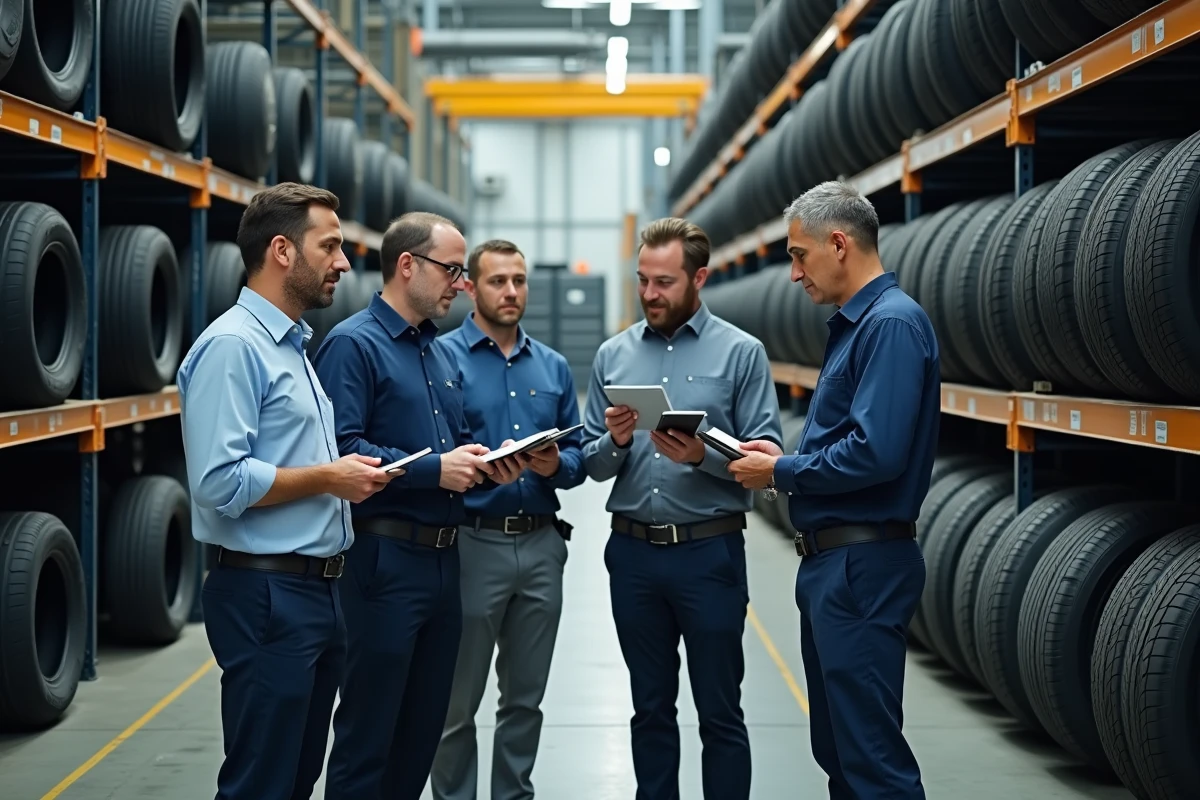
Behind the scenes: how a Kleber tire is born, step by step
It all starts with a demanding selection of raw materials. Natural rubber, the cornerstone of the future tire, is combined with synthetic rubbers, carbon black, and various additives. Each ingredient is chosen for a specific function: flexibility, resistance, grip. This is where the quality of the final product is determined: the dosage directly impacts the tire’s robustness and longevity.
The design of a Kleber tire revolves around several stages: first, a careful mixing of components, under automated control. Next, extrusion shapes the various plies, beads, and tread patterns. Depending on the type of tire, Dynaxer HP4 for the road or a more robust agricultural tire, assembly is done by hand or machine. The goal: to optimize rolling resistance and thus energy consumption.
Molding then gives the tire its final shape. Under pressure and heat, the Quadraxer 3, Krisalp HP3, summer or winter models come to life: each tread pattern is the result of internal research. As soon as they exit the mold, a series of checks begins: visual inspection, strength tests, leak tests. Only tires that strictly meet Michelin’s specifications continue their journey to the consumer.
This process, conducted rigorously from start to finish, allows Kleber to guarantee reliable tires recognized for their performance in the European market. The quality commitment is not an abstract concept: it takes shape every day in the hands and machines that shape each tire.
At the exit of these factories, there is not just a technical object: there is the promise of a safe journey, a legacy passed down, and a collective energy focused on the future. Kleber embodies all of this: an industrial anchor, relentless demand, and the desire to go further, without ever betraying its original spirit.